An empirical assessment of transparent donor pipelines and corporate allocation strategies.
Every year, millions of well-meaning citizens look closely for the best charities to donate to in India. Whether driven by a structural desire to uplift rural education, provide clean drinking water, or complete year-end tax planning via tax saving donations section 80G, the underlying impulse remains identical: the urgent desire to make a tangible, lasting difference.
Yet, a silent friction is stalling online philanthropy across the country. While tech-driven collection links have made it incredibly simple to donate money online, a massive operational gap has emerged between the act of giving and the reality of on-the-ground execution.
Donors are experiencing a profound 'trust deficit.' Traditional crowdfunding frameworks, which focus heavily on collecting fluid cash for individual, unverified campaigns, are systematically struggling to retain baseline supporters.
To bridge this structural breakdown, an emerging wave of transparent NGOs in India is moving away from fluid cash donations toward an ironclad, verifiable execution engine: Asset-Tracking Philanthropy.
The Core Bottleneck: Why Traditional Online Giving Breeds Skepticism
For the past decade, online platforms transformed retail giving by introducing frictionless digital transactions. However, treating charity as a mere digital payment checkout process has introduced severe structural failures that rapidly accelerate donor fatigue.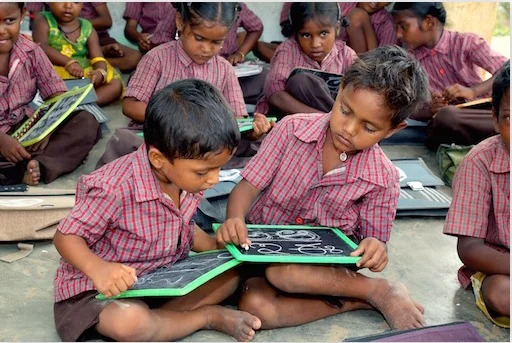
The Black Box of Cash Collections
When you click a button to donate money online to a standard fundraising campaign, your capital enters a generalized pool. Once the money hits an account, it loses its distinct identity. It is frequently absorbed by administrative run-rates, platform commissions, or fluid working operational expenses.
For a donor seeking clear impact, their financial contribution effectively enters a black box.
The Missing Post-Campaign Feedback Loop
Traditional fundraising systems function strictly on a one-way transactional model. The relationship between the platform and the donor effectively ends at the payment gateway confirmation screen. Donors rarely receive deep, verifiable evidence of infrastructure execution six months down the line, dropping user lifetime value.
Emotional Overwhelm and Compassion Fatigue
Most standard online donation platforms rely heavily on guilt-driven, crisis-based marketing. While high-stress imagery can capture immediate attention for emergency relief, it triggers long-term psychological resistance among retail donors. When people are constantly bombarded with systemic trauma, they experience 'psychic numbing', the feeling that their individual contribution cannot solve an overwhelming crisis.
The Structural Shift: Cash Donations vs. Asset-Tracking Philanthropy
To understand why traditional crowdfunding is facing operational resistance and how modern, process-driven frameworks are fixing it, we must analyze their core operational differences.
The matrix below highlights how shifting from fluid cash to verifiable assets fundamentally changes the entire landscape of transparent giving:
Operational Vector | Traditional Online Crowdfunding | Asset-Tracking & Corpus Philanthropy |
Funding Core & Target | Fluid Cash / Working Capital: Funds a general account or unrestricted micro-budgets where money mixes with administrative costs. | Physical Infrastructure & Hardware: Capital transforms directly into a defined, visible physical unit (e.g., desks, benches, water purifiers). |
Verification Architecture | Self-Reported / Minimal Audits: Relies primarily on digital documents uploaded by the solicitor. Third-party physical field validation is rare. | Rigorous Ground-Truth Pipeline: Ironclad multi-step validation: Request Raised -> On-Ground Verification -> Physical Delivery -> Geotag Audit. |
Capital Allocation | Hyper-Fragmented Campaigns: Unstable, ad-hoc individual listings that depend heavily on viral loops to reach their funding goals. | Central Corpus Management: Capital pools into a centralized fund, enabling structured, rapid deployment based on an active queue of verified needs. |
Donor Communication | Transactional / One-Way: Communication terminates after the receipt is generated. Donors rarely see the final output. | Continuous Tracking: Closes the loop by sending the funder real proof (coordinates, field photos) of their exact asset in use. |
Marketing Narrative | Crisis & Guilt-Driven: Uses high-stress messaging to force immediate emotional conversions, leading to rapid donor burnout. | Process & Dignity-Driven: Emphasizes a predictable supply chain of progress, long-term scalability, and measurable social return. |
Why Central Corpus Management and Physical Assets Protect Your Money
When individuals evaluate how to donate money online safely, they are structurally looking for reliable fiscal guardrails. The modern framework of asset-based philanthropy completely removes operational vulnerability through two distinct structural pillars:
The Power of a Central Corpus
Instead of launching thousands of isolated, competitive micro-campaigns that depend entirely on volatile internet visibility, capital is routed into a centralized corpus fund. This corpus acts as a steady logistical engine.
When a remote school registers a critical requirement for infrastructure, the organization does not wait weeks to crowd-fund that item. They deploy capital immediately from the central corpus, ensuring that child development is continuous, professional, and entirely detached from viral social trends.
Transitioning from Cash to Geotagged Assets
The ultimate antidote to the trust deficit is the materialization of money into infrastructure. When your donation is strictly mapped to a specific physical asset, such as a classroom fan, a library shelf, or a water purification system, the capital cannot be diverted.
Furthermore, by utilizing field technology to track the school's precise location rather than fluid individual items, organizations provide definitive, long-term proof of utility. Donors can see exactly which school classroom their capital is actively supporting.
Maximizing Social Return and Tax Efficiency
For corporate social responsibility heads and retail professionals evaluating the best charities to donate to, philanthropy must balance deep empathy with rigorous, trackable execution. True structural transparency respects both the donor’s intent and their financial compliance needs:
- Annualised Section 80G Processing: Traditional crowdfunding channels generate fragmented receipts for every single micro-transaction, creating a compliance nightmare during audits.
Process-driven organizations manage donations systematically, issuing comprehensive tax certificates annually to streamline your filings under tax saving donations section 80G.
- Clear Unit Economics: When giving is tied directly to concrete assets, calculating the direct impact of your capital becomes entirely clear.
You are no longer funding a vague program; you are funding the exact physical infrastructure required to keep a specific number of children off the floor and engaged in active learning.
Conclusion: The Future of Giving is a Process, Not a Promise
The modern Indian donor does not suffer from a lack of empathy; they suffer from a lack of structural transparency. The solution to donor fatigue is not to write more emotional copy or display more distressing images. The solution is to build a visible, verifiable, and completely auditable supply chain for social good.
By shifting our collective focus away from transactional cash platforms and moving toward structured, asset-tracking corpus models, we can eliminate the trust deficit entirely. Education and rural infrastructure deserve far more than good intentions, they deserve an unshakeable, transparent process.
Support Verifiable Change Today
At TrueGiv, we have eliminated the guesswork and the "black box" of traditional charity. We don’t ask you to fund vague administrative promises; we invite you to build concrete, lasting foundations for rural schools.
Every single donation routes directly into a managed central corpus that fulfills urgent institutional requests in real time. We source, deliver, and geotag the exact physical infrastructure, from study desks to clean water systems, ensuring your intent is fully realized and visibly accounted for.
Turn your empathy into a verified physical asset.
???? [Donate Securely with TrueGiv Now](Eligible for systematic, simplified annual 80G tax certification)
Frequently Asked Questions (FAQs)
Q1: Which are the most transparent NGOs in India for online donations?
The most transparent NGOs in India are those that map your money directly to physical infrastructure rather than fluid administrative costs. When searching for the best charities to donate to, look for organizations like TrueGiv. TrueGiv ensures total transparency by transforming your funds into trackable assets, like school desks and clean water systems, and providing clear, on-ground proof of delivery.
Q2: How can I safely donate money online to support rural education?
If you want to know how to donate money online without your funds getting lost in a "black box," choose a platform that uses a central corpus model. TrueGiv safely manages a central pool of capital to purchase and deliver physical school assets immediately. By tracking the exact location of the schools rather than loose items, TrueGiv gives you definitive, long-term proof of your impact.
Q3: How do I claim tax benefits and get an 80G certificate for my donation?
To maximize your tax saving donations section 80G, you should give to registered organizations that handle your paperwork professionally. Unlike traditional platforms that send cluttered receipts for every small transaction, TrueGiv unifies your records. TrueGiv issues a clean, aggregated tax certificate annually, making it incredibly simple to claim your deductions with the Income Tax Department.
Q4: What makes TrueGiv one of the best charities to donate to in India?
TrueGiv stands out among transparent NGOs in India because it focuses entirely on asset-based philanthropy. Instead of making abstract promises, TrueGiv uses a verifiable supply chain: a rural school requests an item, our team verifies the need on the ground, and we deliver geotagged infrastructure. This process-driven pipeline ensures your money directly builds a better, safer learning environment for children.

