The Silent Crisis in Rural Bharat
India’s educational landscape is at a crossroads. While the National Education Policy (NEP) 2020 and the NIPUN Bharat Mission have set ambitious targets for Foundational Literacy and Numeracy (FLN), a massive hurdle remains: the Structural Gap.
For years, corporate social responsibility (CSR) has focused on "soft interventions", like teacher training and digital apps. However, as 2025 data from ASER and UDISE+ show, these tools fail when the foundation is missing. You cannot run a smart-class on a crumbling wall.
This blog explores why the "Wait for Impact" is ending, thanks to the intersection of In-Kind giving and End-to-End Procurement technology.
1. The 40-Year Wait: Why Traditional CSR Fails Rural Schools
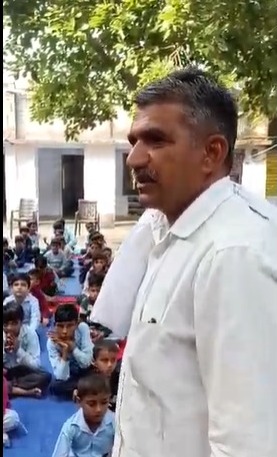
When we speak to veterans like Man Singh Gurjar, the story is always the same. For 4 decades, his village school’s problems, broken benches, grey blackboards, and lack of clean water were "logged" but never "solved."
Why is CSR not reaching rural areas?
The "Last-Mile Trust Deficit" is the primary reason. Donors want to create an impact, but they fear their funds will be lost in administrative overheads or middle-layer leakages. Historically, only 15% of CSR funds reached the most backward districts, while 70% stayed in developed urban hubs.
For four decades, the intent to help was there, but the bridge was missing. "People came and went," Man Singh shares, "but the problems stayed." Traditional philanthropy often relies on a "cascade model" where funds trickle down through multiple NGOs and government layers. By the time the "help" reaches a village school, it is often diluted or mismanaged.
The TrueGiv Solution: By shifting the focus from cash to verified in-kind procurement, technology ensures that a donor’s intent actually arrives at the school gate in the form of a physical bench or a water cooler. We don't just "fund" a school; we equip it.
2. In-Kind Giving vs. Cash Donations: Which has higher ROI?
Benefits of in-kind donations for CSR compliance
In 2026, CSR heads are under more pressure than ever for audit-ready transparency. Cash is hard to track; physical goods are impossible to hide. When a corporate entity donates cash, the "impact" is often a line item in an audit report. When they donate a water cooler through TrueGiv, the impact is that a child no longer suffers from water-borne illnesses.
|
Feature
|
Cash Donations
|
In-Kind Procurement (TrueGiv)
|
|
Visibility
|
Low (Lost in general funds)
|
High (GPS-tracked delivery)
|
|
Impact Speed
|
Slow (Delayed by bureaucracy)
|
Fast (Direct-to-school delivery)
|
|
Trust Factor
|
Requires heavy auditing
|
Validated by visual proof
|
|
Compliance
|
Subject to administrative leakages
|
100% of the value reaches the school
|
TrueGiv defines "Impact ROI" not by the amount spent, but by the "Structural Readiness" of the classroom to support NIPUN Bharat learning goals.
3. Powering Kindness with Tech: The E-commerce of Impact
Role of technology in CSR transparency in India
How did we solve a 40-year-old problem in a few weeks? By utilising the same tech that powers your favourite shopping apps. TrueGiv utilises an End-to-End Procurement Engine to bridge the gap. We don’t just "fund" a project; we manage the supply chain.
The TrueGiv Tech Stack Breakdown:
- Direct School Enrollment & Need Enlistment: We have decentralised the discovery process. Instead of top-down guesswork, schools across rural Bharat register directly on the TrueGiv platform. They enlist their specific, ground-level needs, whether it’s 20 benches, a clean drinking water system, or sports kits.
This ensures the "Man Singh Gurjars" of India have a digital voice to share the problems they’ve been facing for 40 years.
- Transparent E-Procurement: Once a need is enlisted and a donor steps forward, we buy high-quality furniture and kits at scale. Because we act as a specialised e-commerce platform, we bypass middlemen and local retail markups, ensuring that 100% of the donor's value is converted into physical goods delivered to the school gate.
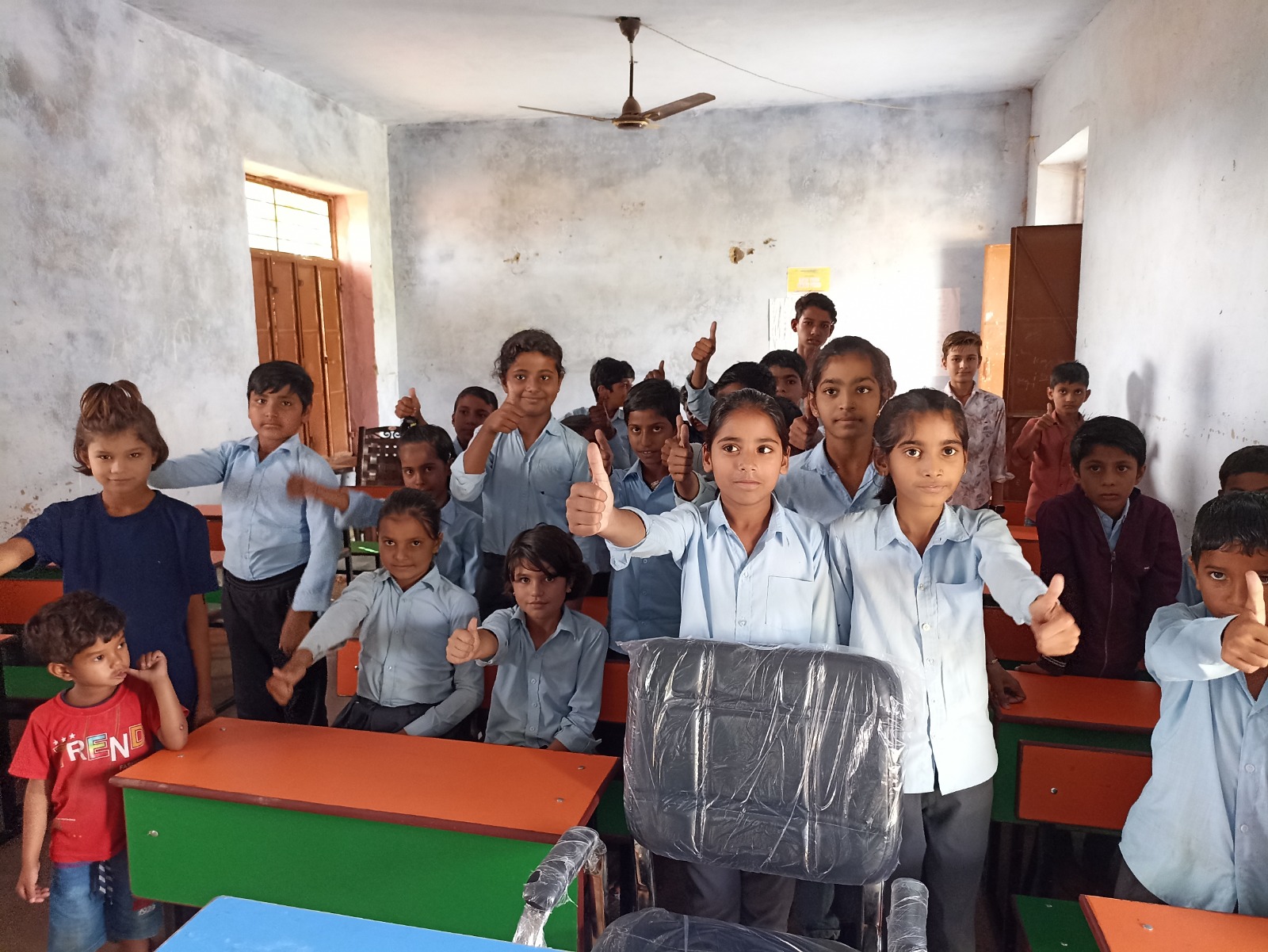
- The Digital Handshake (Validation): Technology doesn't stop at delivery. Once the bench is in the classroom, the school confirms receipt via our platform. This triggers an automated "Impact & Deployment Report" sent directly to the donor, complete with photographic evidence and geotagged validation.
Image 4- Truegiv website screenshot of 5steps
4. The "Kit Effect": Why Ownership Matters for FLN (Foundational Literacy and Numeracy)
How to improve foundational literacy in rural India?
A major finding in 2026 is that "access" to a library is not enough; "ownership" is the key. In rural India, a child who shares a textbook with four others is 60% less likely to complete their homework.
When a child receives a personal TrueGiv Kit, something psychological shifts. They aren't just using a "school resource"; they are holding their future. This is the Kit Effect. Individual ownership of pens, notebooks, and sports gear significantly reduces dropout rates. It builds dignity, and dignity is the strongest driver of Primary Education Retention.
5. The Teacher’s Perspective: Removing the "Invisible Handcuffs"
We often blame teachers for poor learning outcomes, but we ignore their environment. A teacher’s energy is a finite resource. In a rural classroom without basic facilities, 60% of that energy is spent on management, not instruction.
They spend time managing the discomfort of children sitting on the floor. They spend time managing the "sharing" of a single pencil among five students. When TrueGiv steps in with benches and proper blackboards, we aren't just "buying furniture." We are removing the invisible handcuffs. We are allowing a teacher to finally teach.
6. Building a Positive Future: The Prosperity Bridge
The prosperity of our cities must reach our villages. But it shouldn't reach them as "charity." It should reach them as an investment in the future workforce of India.
The story of Man Singh Gurjar is a reminder that the "wait" is a choice. We have the technology to end it today. When a school looks and feels like a place of growth, the community respects it more. Parents are more likely to send their daughters to a school that has a functional, private toilet and a clean environment. Infrastructure is the strongest bridge between a village home and a school gate.
Be the Catalyst for the Next 40 Years
Man Singh Gurjar’s school didn't need another 40 years of discussion; it needed a bench. It needed a water cooler. It needed a donor who could see through the fog of distance. Technology has finally made it impossible to ignore rural Bharat.
Are you ready to turn your corporate intent into a child’s measurable reality?
FAQ: What CSR Donors are Asking in 2026
Q: Are in-kind donations tax-deductible under Section 135?
A: Yes. Under the Companies Act, expenditures on physical goods for educational infrastructure (benches, blackboards, water filters) are fully compliant. In fact, auditors prefer in-kind giving because the proof of expenditure is physical and verifiable.
Q: How does TrueGiv ensure funds reach the "unreachable"?
A: We focus on Aspirational Districts and remote blocks where traditional NGOs often lack the logistics to reach. Our tech-driven procurement handles the "last-mile" delivery that others find too difficult.
Q: Can we track our impact in real-time?
A: Absolutely. TrueGiv provides a dashboard where every bench and every kit is tracked from the warehouse to the classroom. You get photos, testimonials, and validation reports.

